|
beauty,
health & hygiene
general
healthcare
skincare
cosmetics
& perfumes
body
hair
cleanliness
& hygiene tools
bathing
hair
care
hair
styles
oral
care
& dentistry
intimate
feminine
hygiene
|

Medieval
Beauty, Health & Hygiene
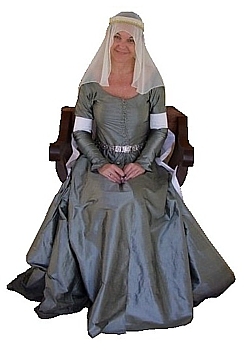 Generally,
the fashionable lady's look for the bulk of the medieval period
was as follows- high forehead, plucked eyebrows, small even teeth,
a fair complexion, long neck, narrow chest, low sloping shoulders,
high small waist and in some cases, a prominent stomach. Generally,
the fashionable lady's look for the bulk of the medieval period
was as follows- high forehead, plucked eyebrows, small even teeth,
a fair complexion, long neck, narrow chest, low sloping shoulders,
high small waist and in some cases, a prominent stomach.
Women were often described as fair regardless of their
natural colouring because fair was the idealised idea of beauty.
Beauty and hygiene is divided into nine separate pages-
Beauty
SKINCARE
Skincare, herbal remedies for clear skin
COSMETICS & PERFUMES
Foundation, eyeliner & eyeshadow, lip balm, rouge
and perfumes
HAIR STYLES
Hairstyles, braids, cornettes, ramshorns, european style, false
hairpieces & wigs, hairnets, eyebrows and hairline
BODY HAIR
Body hair and what to do about it, the hairline, eyebrows and
other hair
Health
and Hygiene
CLEANLINESS
& HYGIENE TOOLS
Bathing, grooming tools, deodorant, soap and perfume
BATHING
Baths and how to have them
HAIR CARE
Brushes, combs & gravours, hair balms & tonics, headlice
treatments, dandruff treatments, colouring the hair
ORAL CARE & DENTISTRY
Breath freshener, tooth whitinging remedies, toothache remedies,
tooth decay, dentistry, dentures
FEMININE HYGIENE
Menstruation and what to do about it, premenstrual tension,
the wandering womb, feminine hygiene products
GENERAL HEALTHCARE
Headaches, weightloss remedies, dealing with worms, warts &
corns, mosquito repellants, antiseptics, toilet paper
One of the first manuals
of feminine beauty written at Salerno and is widely believed to
be that of the lady physician and author, Trotula de Ruggiero
from the 11th century. Trotula was credited to be the author of
three treatises, but according to Henrietta Leyser in her book
Medieval Women- A Social History of Women in England 450 -
1500, the authorship of them is doubtful. 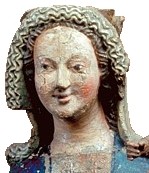
Although Trota did write
on the subject in The Practice According To Trota, it is
believed that Trota herself did not write any of the works widely
credited to her. Her treatise was little known in Europe and not
translated into any vernacular. Henrietta Leyser goes on to explain
where the texts are believed to have originated and why. Those
treatises are known as- Trotula A, Trotula B (which
is distinctive for its large number of cosmetic recipes for the
face and hair), and Trotula C or The Book of Rota.
Shown at right is a detail from a sculpture of the Madonna
and Child from approximately 1370 showing a woman possessing
all the qualities of a beautiful medieval woman- eyebrows almost
missing, high, rounded forehead, fair skin and rosy cheeks.
Copyright
© Rosalie Gilbert
All text & photographs within this site are the property of
Rosalie Gilbert unless stated.
Art & artifact images remain the property of the owner.
Images and text may not be copied and used without permission.
|
